
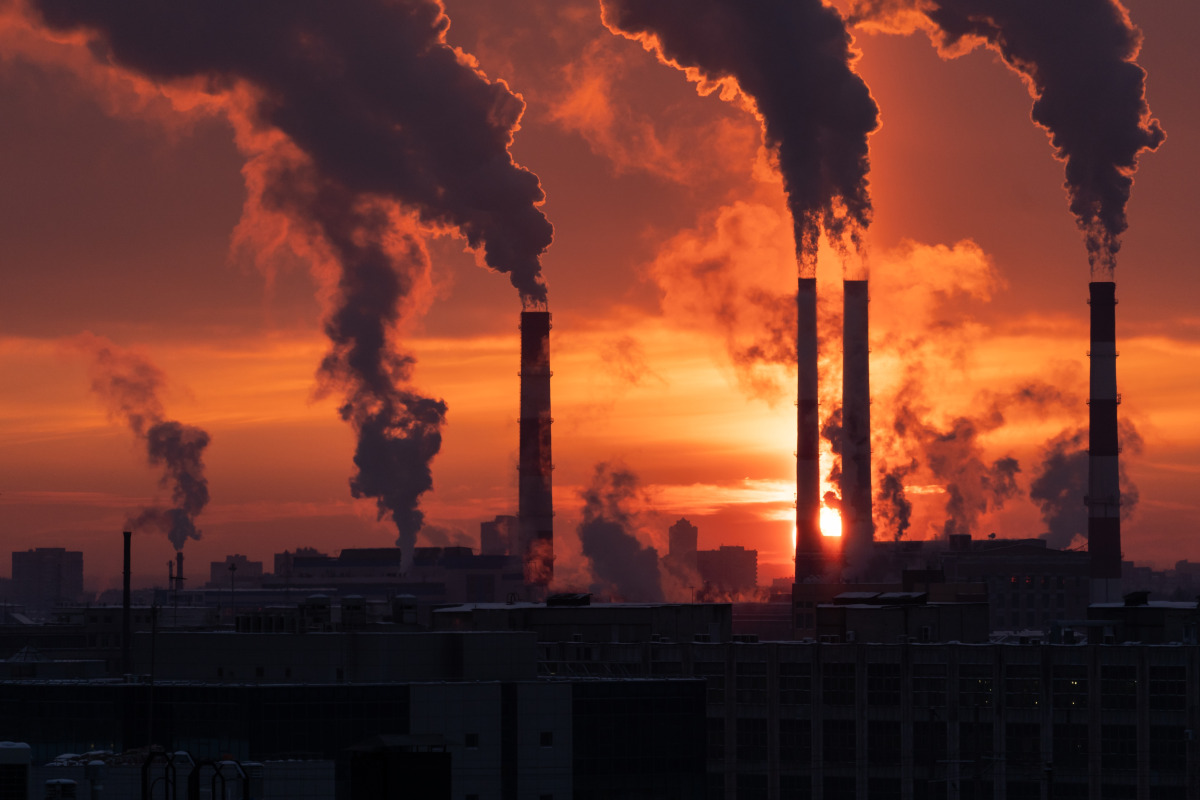
On September 17, 2026, EPA proposed to end regulation of greenhouse gas emissions from power plants, even though U.S. power plants are a larger source of emissions than any other country in the world except China, India, and Russia.
A group of 21 attorneys, academics, scientists and other professionals (including me), who collectively have more than 600 years of experience working on climate change, have filed comments urging EPA not to finalize this proposal. In our 98-page filing, we advance two arguments. While many have made the first argument, based on the Clean Air Act, few have advanced our second argument, which is based on international law.
I. EPA’s Proposal Violates the Clean Air Act
EPA’s position on the Clean Air Act boils down to this: Even though Congress was well aware of greenhouse gas emissions when the Act was adopted in 1970, and even though EPA has interpreted the Clean Air Act to authorize regulation of all pollution from stationary sources for half a century, and even though power plants are an enormous source of greenhouse gas emissions, EPA has just now discovered that the Clean Air Act does not regulate these emissions.
EPA’s proposal is inconsistent with generally accepted rules of statutory construction. It violates the clear words of the Clean Air Act. It ignores the Act’s legislative history. It is contrary to the Act’s regulatory structure. It is directly inconsistent with the Supreme Court’s decision in Massachusetts v. EPA, 549 U.S. 497 (2007), and later applicable decisions by the Supreme Court and lower courts. It is also inconsistent with years of EPA’s application of relevant provisions of the Act to all pollutants, including greenhouse gases.
EPA’s new-found “best reading” of the Clean Air Act is less about statutory interpretation than about trying to find a way to read the Act that is consistent with President Trump’s personal view that climate disruption from greenhouse gas emissions is not “real” and therefore is not a problem that EPA needs to address. President Trump’s views are reflected in at least three executive orders directing national policy toward support for fossil fuels and their attendant increased greenhouse gas emissions—executive orders that EPA cites at the beginning of the proposal under the heading, “Need for Regulatory Action.” Although EPA uses different language here, the proposal is a full-throated endorsement of President Trump’s views on climate change science and, in particular, the effects of increasing greenhouse gas emissions.
II. EPA’s Proposal is Inconsistent with the Public International Law Governing Protection of the Global Climate, Which Confirms That It Cannot Be Consistent with the Clean Air Act.
EPA ignores international law altogether in this proposal. EPA is wrong because it ignores the landmark July 23, 2025 International Court of Justice (ICJ) advisory opinion regarding climate change obligations shared by all nations of the world. The opinion is advisory only in the sense that it advises all countries on their climate change obligations under international law, and its holdings on those obligations are authoritative under international law.
From other statements EPA has made, EPA apparently believes that the pending U.S. withdrawal from the U.N. Framework Convention on Climate Change and U.S. withdrawal from the Paris Agreement mean that the U.S. has no international obligations regarding climate change. This is a serious misreading of the ICJ’s opinion, which is based not only on international agreements but also customary international law. Under Article 38 of the ICJ Statute, “international custom, as evidence of a general practice accepted as law,” operates as a separate and binding force of international law.
According to the ICJ, each nation-state has at least three specific duties regarding climate change under customary international law:
- the duty of each nation-state to effectively regulate greenhouse gas emissions within their jurisdiction or control.
- the duty to prevent significant climate harm, and
- the duty of international cooperation and good faith.
ICJ Advisory Opinion ¶ 457(3)(B).
Notwithstanding U.S. actions concerning the Framework Convention and the Paris Agreement, the customary international law of climate protection continues to bind the United States. EPA’s proposal would violate each of these customary international law duties.
First, it would violate the duty requiring nation-states to effectively regulate greenhouse gas emissions within their jurisdiction or control. Throughout the advisory opinion, and particularly paragraph 428, the Court specifically addressed the administrative-law situation at issue here. The advisory opinion expressly identifies the duty of nation-states to exercise their sovereign powers, acting through regulatory authorities such as EPA to effectuate meaningful emissions reduction measures applicable to private parties within their jurisdiction, such as fossil-fuel-fired power plants. Here, EPA is not merely declining to establish a new program. It proposes to repeal an existing federal mechanism that regulates emissions from private entities operating within U.S. jurisdiction.
Second, it disregards the customary international law duty to prevent significant climate harm. This obligation requires nation-states to use all means at their disposal, including regulatory measures, to prevent activities within their jurisdiction or control from causing significant harm to the climate system. The Court further explained that due diligence is a “standard of conduct,” and that a nation-state is responsible for “fail[ing] to take all measures which were within its power to prevent the significant harm.” ICJ Advisory Opinion ¶¶ 280, 409, 457(3)(B)(a). EPA’s proposal does not examine whether repeal of greenhouse gas standards for power plants is consistent with those obligations. Instead, it largely treats repeal as a question of domestic policy and statutory interpretation.
Third, it disregards the customary international law duty of international cooperation and good faith. The ICJ’s advisory opinion identifies international cooperation as an international legal duty, not a matter committed entirely to political discretion. The Court emphasized that climate change is a problem requiring collective action and that obligations of cooperation retain significance precisely because the actions of multiple States contribute to the harm at issue. There is nothing in this proposal about cooperation with other States, much less any explanation of how this proposal would help other nations. To the contrary, EPA’s proposal reflects a unilateral U.S. decision to forgo regulation of greenhouse gas emissions from power plants and is the antithesis of good faith cooperation on meaningful efforts to address climate change.
Over the arc of more than 200 years, it has been well settled that statutes adopted by Congress must be read to avoid conflicts with international law if at all possible. As Chief Justice Marshall found in Murray v. Schooner Charming Betsy, 6 U.S. (2 Cranch) 64, 118 (1804), “an act of Congress ought never to be construed to violate the law of nations if any other possible construction remains.” There is simply no evidence that EPA took such considerations into account in crafting this proposal.
We are not suggesting that EPA must act at the direction of an international tribunal. Rather, the ICJ identified legal considerations that are plainly relevant to the Agency’s exercise of delegated authority and EPA has either not addressed them or failed to consider to consider them in sufficient detail.
The United States reciprocally benefits from the performance of those obligations by other nation states, through maintaining the integrity, and reducing degradation, of the global climate system. EPA should not go ahead with this proposal.